


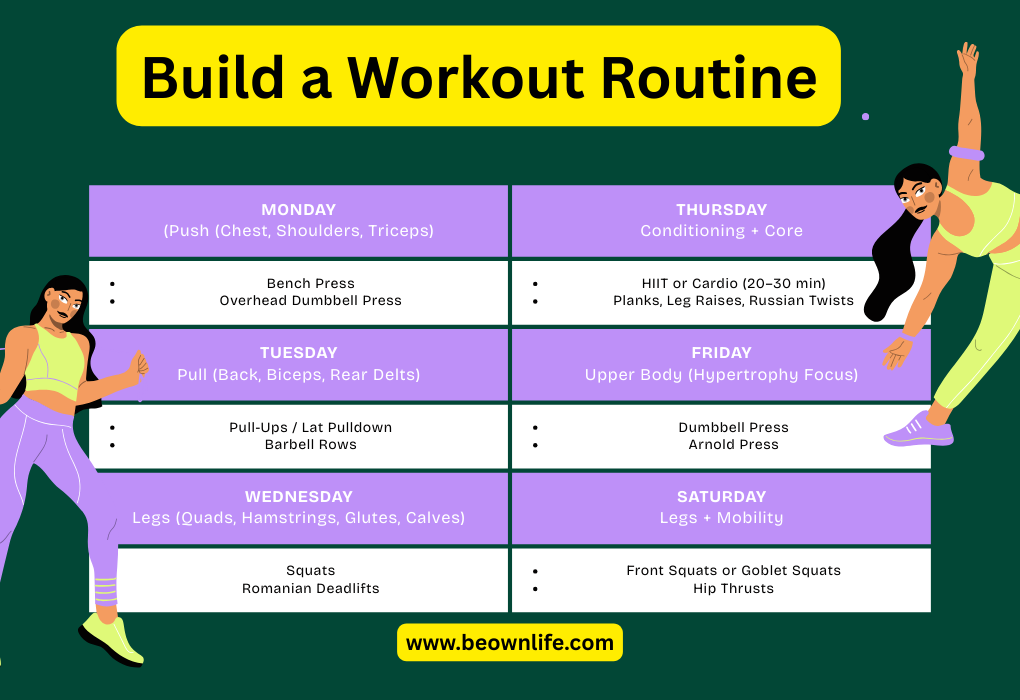
If you’ve ever started working out but stopped after a few weeks because you didn’t see results, you’re definitely not alone. This happens to millions of people every year. The motivation is there in the beginning, but without a proper workout plan, progress becomes slow and frustrating.
The good news is that building an effective workout routine isn’t as complicated as many people think. You don’t need to spend hours in the gym, and you don’t need a personal trainer to see real results.
What you actually need is a structured routine that matches your goals, fitness level, and lifestyle. When your workouts follow a clear plan, your body adapts faster, your strength improves, and your motivation stays high.
To build a workout routine for maximum results, you should define your fitness goal, train 3–5 days per week, combine strength training and cardio, apply progressive overload, and allow proper recovery time.
Why a Structured Workout Routine Is So Important
Many beginners make the mistake of doing random workouts every day. One day it’s cardio, the next day it’s push-ups, then maybe some sit-ups. While movement is always good, random exercise rarely produces noticeable progress.
A structured routine works differently. It gradually challenges your muscles, improves endurance, and allows proper recovery so your body can adapt and grow stronger over time.
- More consistent fat loss
- Faster muscle development
- Lower risk of injuries
- Better energy levels
- Improved mental health and focus
Think of your workout routine as a roadmap. Without a plan, you may still move forward—but the journey becomes slower and much more confusing.
Step 1: Define Your Fitness Goal First
Before you pick exercises or choose how many days to train, you need to decide exactly what you want to achieve. Your goal will shape the entire structure of your workout routine.
Most people fall into one of the following categories:
- Weight loss and fat burning
- Muscle building
- Strength training
- General fitness and health
- Athletic performance
For example, someone who wants to lose weight will usually include more cardio workouts, while someone who wants to build muscle should focus primarily on strength training.
If your goal is fat loss, a weekly routine might include 3 strength workouts and 2 cardio sessions.
If your goal is muscle gain, your routine may focus on heavier resistance training and progressive overload.
Once you define your goal, the rest of your routine becomes much easier to build.
Step 2: Decide How Many Days You Can Work Out
Consistency is more important than intensity. It’s better to follow a routine you can maintain every week rather than creating an unrealistic plan that quickly leads to burnout.
Recommended Weekly Training Frequency
- Beginner: 3 days per week
- Intermediate: 4–5 days per week
- Advanced: 5–6 days per week
For many people, training four days per week provides the perfect balance between results and recovery.
- Monday – Upper body strength
- Tuesday – Lower body workout
- Wednesday – Rest or light cardio
- Thursday – Upper body workout
- Friday – Lower body + core
- Weekend – Active recovery
Step 3: Include the Four Essential Types of Exercise
A balanced fitness routine should challenge your body in several different ways. The most effective workout programs combine four important types of training.
1. Strength Training
Strength training builds muscle and increases metabolism, which helps your body burn more calories even while resting.
- Squats
- Deadlifts
- Bench press
- Pull-ups
- Push-ups
2. Cardiovascular Exercise
Cardio workouts improve heart health, endurance, and calorie burn.
- Running
- Cycling
- Jump rope
- Rowing
- HIIT workouts
3. Mobility and Flexibility Training
Flexibility exercises keep your muscles loose and reduce injury risk.
- Stretching routines
- Yoga
- Foam rolling
4. Core Training
Your core supports nearly every movement you perform. Strong core muscles improve posture, balance, and athletic performance.
- Planks
- Russian twists
- Leg raises
- Mountain climbers
Step 4: Use Progressive Overload
One of the biggest reasons people stop seeing results is because their workouts never become more challenging.
Your body quickly adapts to repeated stress. If you always lift the same weight or run the same distance, progress will eventually stop.
- Increase the weight you lift
- Add more repetitions
- Increase total workout sets
- Reduce rest time between sets
- Improve your exercise form
Even small improvements each week can produce major long-term results.
Step 5: Don’t Ignore Recovery
Rest is just as important as training. When you exercise, your muscles experience tiny stress and damage. During recovery, your body repairs these tissues and makes them stronger.
Without proper rest, your body becomes fatigued and performance decreases.
Simple Recovery Tips
- Sleep 7–8 hours each night
- Stay hydrated
- Eat enough protein
- Take 1–2 rest days each week
- Stretch after workouts
Example Beginner Workout Routine
Day 1 – Full Body
- Squats – 3 sets
- Push-ups – 3 sets
- Plank – 3 rounds
- Jump rope – 10 minutes
Day 2 – Cardio
- Brisk walking or jogging – 30 minutes
Day 3 – Strength + Core
- Lunges – 3 sets
- Pull-ups or rows – 3 sets
- Russian twists – 3 sets
- Stretching – 10 minutes
Common Workout Mistakes Beginners Should Avoid
- Skipping warm-ups
- Training too intensely too soon
- Using poor exercise form
- Changing routines every week
- Expecting instant results
Fitness progress takes time. Stay consistent and trust the process.
Final Thoughts
Building an effective workout routine is not about doing the most exercises or spending hours in the gym. It’s about following a structured plan that matches your goals and staying consistent week after week.
Focus on strength training, add cardio for endurance, prioritize recovery, and gradually increase workout intensity. Over time, these simple habits can completely transform your fitness level and overall health.
Frequently Asked Questions
How many days per week should I work out?
Most people get great results training 3–5 days per week, depending on their goals and recovery ability.
How long should a workout session be?
A typical workout should last between 45 and 60 minutes for optimal results.
Is cardio necessary for fat loss?
Cardio helps burn calories and improve heart health, but strength training is equally important for long-term fat loss.

